
Pocket Doors: Hidden Hardware, Visible Value
Known for their concealed operation and streamlined appearance, modern pocket door systems offer a host of overlooked qualities that add real value to design projects, says David Knollman, Brio business development manager at Allegion UK.
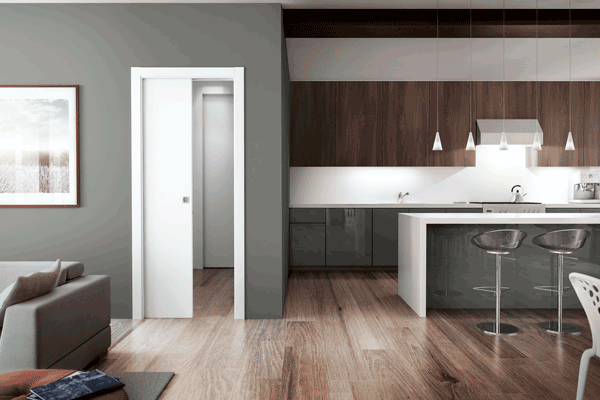
Pocket doors are, by definition, subtle in design. With a sleek aesthetic and hidden mechanisms, they seamlessly glide into wall cavities and disappear, leaving behind clean, uncluttered interiors and a minimalist look that has become widely popular in both residential and commercial spaces.
Despite their low-profile nature, pocket door systems deliver highly visible – and highly valuable – benefits to contemporary projects. Though, where many recognise their unique aesthetics, hidden to some are the lesser known qualities that are making today’s configurations more reliable, compatible and accessible than ever before.
As hardware performance and project suitability develops further, design teams now have access to a broader set of practical benefits when selecting pocket door systems, explains David Knollman:
“Pocket doors are often the first choice for minimalist design schemes, and for good reason. Architects, specifiers and end users have long valued the clean, unobtrusive details that they bring to modern environments when space is limited. In fact, one of the key advantages is the spatial freedom they create – which is emphasised when compared with traditional internal swing doors that require anywhere from 0.8 to 1 square metres of floor space per door when opening and closing.
“Pocket door applications reclaim this floor space, which is especially valuable in smaller rooms and narrow walkways where flow of movement is key. What’s more, as pocket doors utilise the untouched area found in wall cavities, they simultaneously create additional wall space, clearing the way for art, wall hangings and detailed design elements. When paired with the characteristic low-profile features of the door and frame, the architectural appeal is clear to see.
“But beyond aesthetics and space-saving abilities, there are also a number of refined functionality features designed to enhance safety and long-term performance. High quality pocket door hardware kits often incorporate soft-close and soft-open mechanisms for example, which are precisely engineered to help manage the operation of doors and enhance user comfort. Dampening technology ensures smoother and quieter movement, which not only elevates user experience but also helps to extend the door’s lifespan by reducing impact load and minimising the stress of the opening and closing process.
“The controlled sliding motion of pocket doors can also mitigate some of the common safety issues associated with swing doors. By sliding into the wall cavity, users can foster a more accessible environment by removing doors that swing outward into circulation paths. This reduces impact risks and pinch hazards whilst keeping pathways clear, which is particularly useful for projects where ease of movement is priority and for compact settings where children may be residing.”
Greater compatibility, growing value
Where pocket doors have typically been limited to areas of compact space, such as en-suite bathrooms and walk-in wardrobes, the flexibility offered by today’s systems means they have become a resourceful option for almost any room. Reliable hardware can now deliver a level of versatility that goes far beyond the minimalist brief, David continues:
“As modern design continues to favour open-plan layouts and multi-use spaces such as workspaces, pocket doors are filling the walkways that were once occupied by other doorsets. Hardware compatibility is one of the driving factors behind this, with manufacturers now providing pocket door framing kits designed specifically for plasterboard walls, as well as metal and timber studs. This versatility carries through to the door application too, where modern solutions are suitable for both single and double doors of various sizes.
“Hardware kits can support different carrying capacities also and when correctly specified, are dependable for loads of up to 120kg. From a reliability perspective, trusted hardware offers greater strength and stability in operation, with rollers and precision engineered tracks ensuring consistent movement and structural longevity. The quality of a pocket door’s track assembly is certified by high cycle testing periods, where hardware must endure over 100,000 cycles to confirm it remains reliable throughout the door’s lifecycle – eliminating some of the industry concerns of old regarding long-term alignment and sticking issues.”
And so, as design teams continue to balance flexible layouts and aesthetic charm, the combination of concealed hardware, spatial efficiency and durable compatibility offered by pocket doors is in demand. Certainly, where pocket door systems were once considered an alternative to traditional swing doors, they have perhaps now evolved into a natural upgrade.